
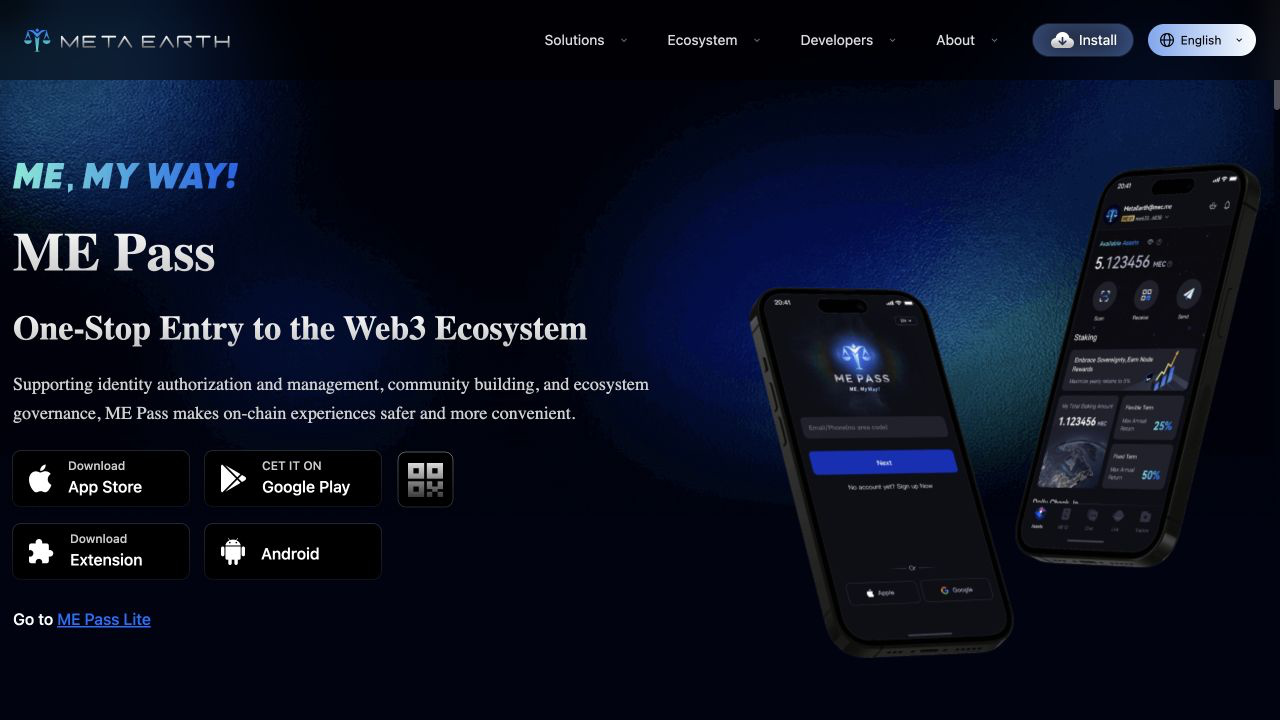
ME Pass is Meta Earth’s app for a wallet, a verified ME ID and its Web3 ecosystem. It is not a survey dashboard and it does not promise a fixed cash reward for tapping through tasks. The app is built to create and manage wallet addresses, hold digital assets, verify an ME ID, join governance and use Meta Earth services. Its reward language is about MEC, the project’s crypto asset, so it makes sense to start with that distinction rather than treating it like a normal cashout app.
What you can actually do in the app
ME Pass brings a few jobs together. You can create or import a wallet, see your assets, send and receive supported digital assets, manage an ME ID and take part in the wider Meta Earth ecosystem. The project also describes governance features, staking tools and mini-program access. That is useful if you already want one place for those things. It is less useful if your only goal is a simple PayPal or gift-card withdrawal.
ME ID is the important account layer. Meta Earth says one person can have one verified ME ID. Completing its verification is presented as the key that opens UBI-related benefits, check-in rewards, staking options and ecosystem incentives. Availability can change by country, campaign and account status, so treat the live screen in your own app as the final answer.
How MEC rewards work
Meta Earth describes MEC rewards as crypto issued through its staking model. A verified ME ID is associated with a permanently staked MEC under the project’s published model, and the app says daily staking rewards are settled to the wallet in MEC. That is not the same as being paid a stable cash amount. MEC can move in price, access to any swap or transfer route can vary and network transactions may have their own costs.
In plain terms, a growing MEC balance is still a crypto balance. Check the asset, the receiving address, the transfer option and any fee before you make decisions around it. Do not spend money you need or count an in-app reward as income before you understand how it can be used in your region.
How one user turned MEC into GCash
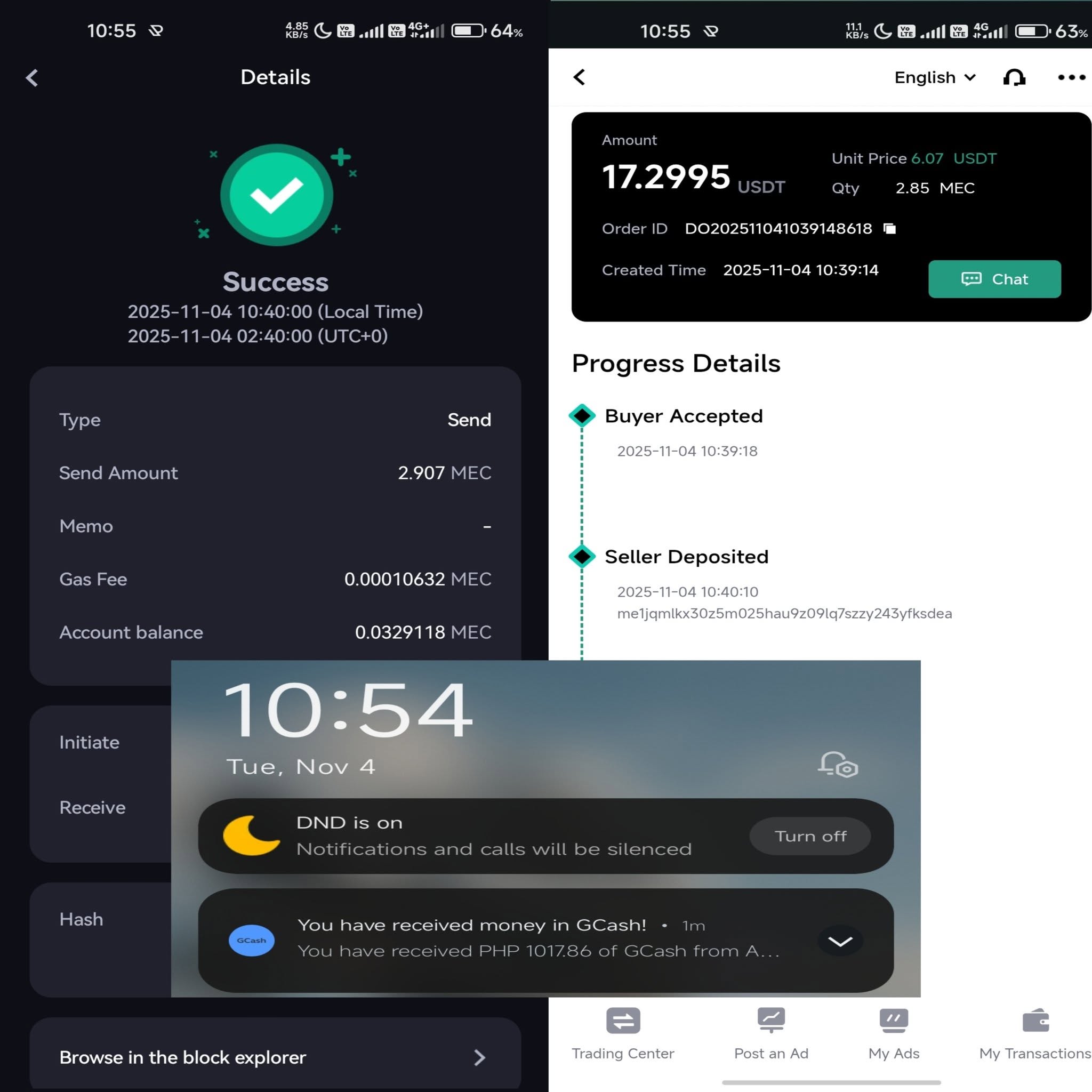
Here is what a cashout can look like in practice. One user sent 2.907 MEC, then used a P2P trade to sell 2.85 MEC. The trade screen shows 17.2995 USDT, and the buyer paid the user through GCash in Philippine pesos. The GCash notification arrived a minute later. It is a clear example of one user moving MEC into local money, not a promise that every account will see the same rate or route.
Set it up like a wallet, not a casual game
The official documentation says wallet private keys are stored locally on your device. That puts the usual wallet responsibility on you. Save the recovery phrase offline, never send it to support or a stranger, and use the security features the app offers. Confirm the publisher is Meta Earth Association before downloading, especially on mobile stores where copycat apps can appear.
It is also worth doing a tiny test before a larger transfer. Check every character of the address, choose the correct network and make sure you know what the confirmation screen means. A mistaken crypto transfer is rarely as easy to reverse as an ordinary payment.
A sensible way to judge ME Pass
ME Pass makes sense for someone who wants to explore the Meta Earth ecosystem and is comfortable learning basic wallet habits. It does not make sense to join solely because a campaign mentions a reward. There is no universal public fiat cashout minimum or fixed payment speed to rely on here. The useful questions are whether ME ID verification is available to you, which MEC features your account shows and whether you are comfortable with crypto risk.
Keep the first steps small, protect your recovery phrase and let the real options in your own account guide you. That is a much better starting point than chasing a number on a promotional screen.